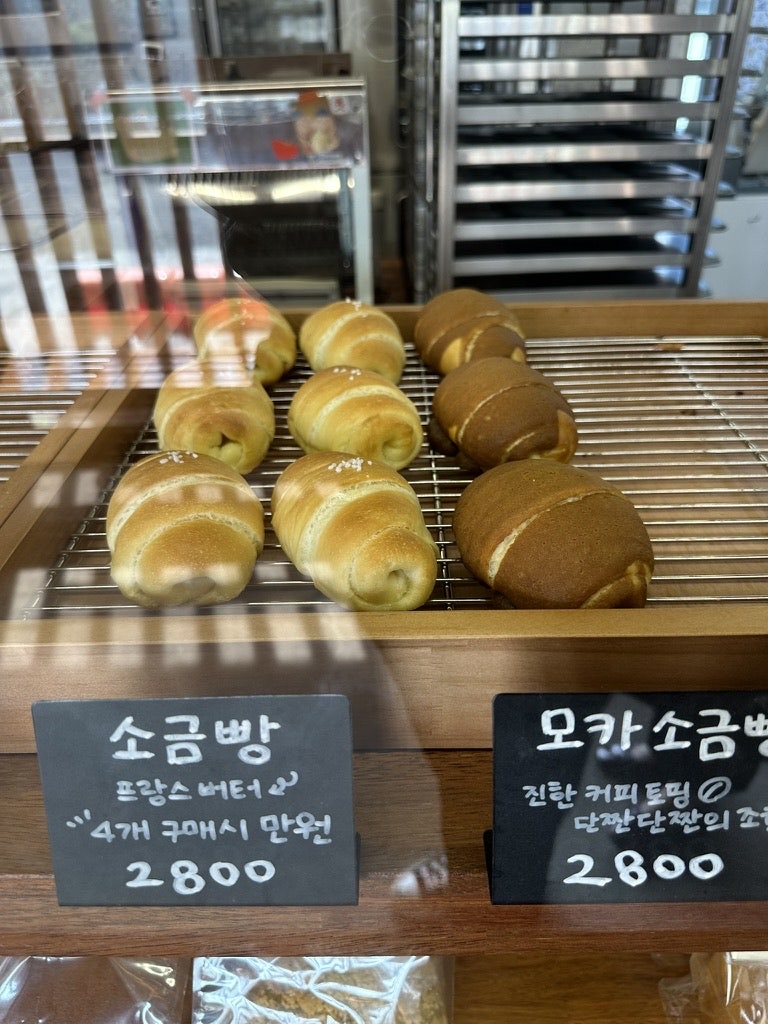
Kinjo Bakery (킨조베이커리) is a small, takeout-only bakery on Bijarim-ro in Gujwa-eup, on Jeju’s east side, famous for a ribbon-shaped signature bread called the Halla-bon. It was sold out by the time we arrived in the afternoon, but the salt bread (KRW 2,800) and croque monsieur (KRW 2,500) we took instead were so good that we finished them in the car. Even without the signature, this is a place with more than enough skill to satisfy you on the basic breads alone.
| Bakery | Kinjo Bakery (킨조베이커리) |
| Address | 1F, 1814 Bijarim-ro, Gujwa-eup, Jeju-si, Jeju-do (behind a GS25 convenience store building) |
| Hours | 07:30–17:00 per my notes; the sign by the door read OPEN 07:00, CLOSE 17:00 |
| Closed | Mondays and Tuesdays; closes early when the bread sells out |
| Format | Takeout only, no seating area |
| Signature | Halla-bon (KRW 4,500 on the tag), which sells out early in the morning |
| What we bought | Salt bread (KRW 2,800) and croque monsieur (KRW 2,500), plus drinks |
| Good to know | Close to Bijarim Forest and Gujwa-eup sightseeing routes |
| When we went | An afternoon in March 2026, after a morning on Anchin Oreum, with my partner |
Hello, I’m Hogal, a marketer who runs on curiosity. This is a review of Kinjo Bakery, a bakery that bread lovers make a pilgrimage to on Jeju.
Prologue: running on empty after Anchin Oreum, so out came the wish list
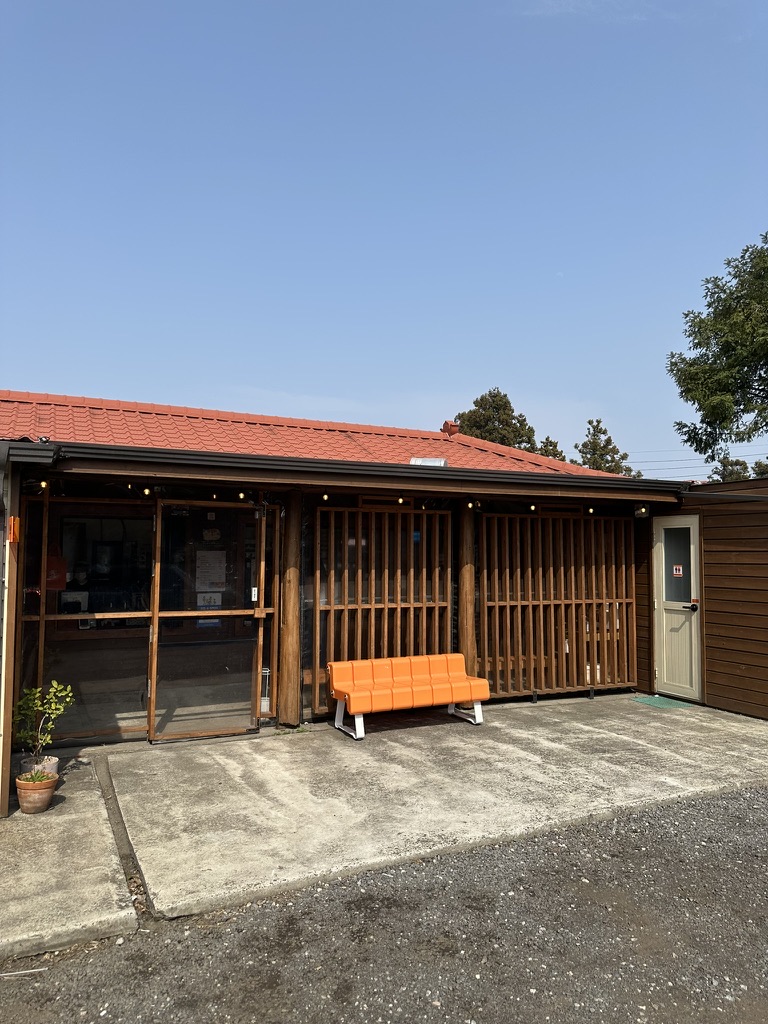 A quiet, uncrowded shop front.
Part of the fun of a Jeju trip is the spontaneous moments that pop up now and then, even inside a carefully planned itinerary. That morning, my partner and I headed to Anchin Oreum, one of Jeju’s small volcanic hills, to capture Jeju’s nature in our frames. After taking photos with real passion against that beautiful scenery and climbing up and down the oreum, our energy suddenly drained away without warning, and a huge hunger rolled in. The moment we got in the car, a sense of crisis set in: if we did not get a transfusion of carbs right now, something bad was going to happen.
That was when the wish list of restaurants and cafes I had carefully saved in my phone’s map app, as the hardcore planner that I am, finally earned its keep. I scanned for the place that could most quickly and reliably guarantee good food from where we were, and there it was: Kinjo Bakery in Gujwa-eup, a holy site for Jeju bread pilgrims. With no reason to hesitate, I set the navigation and drove straight for it.
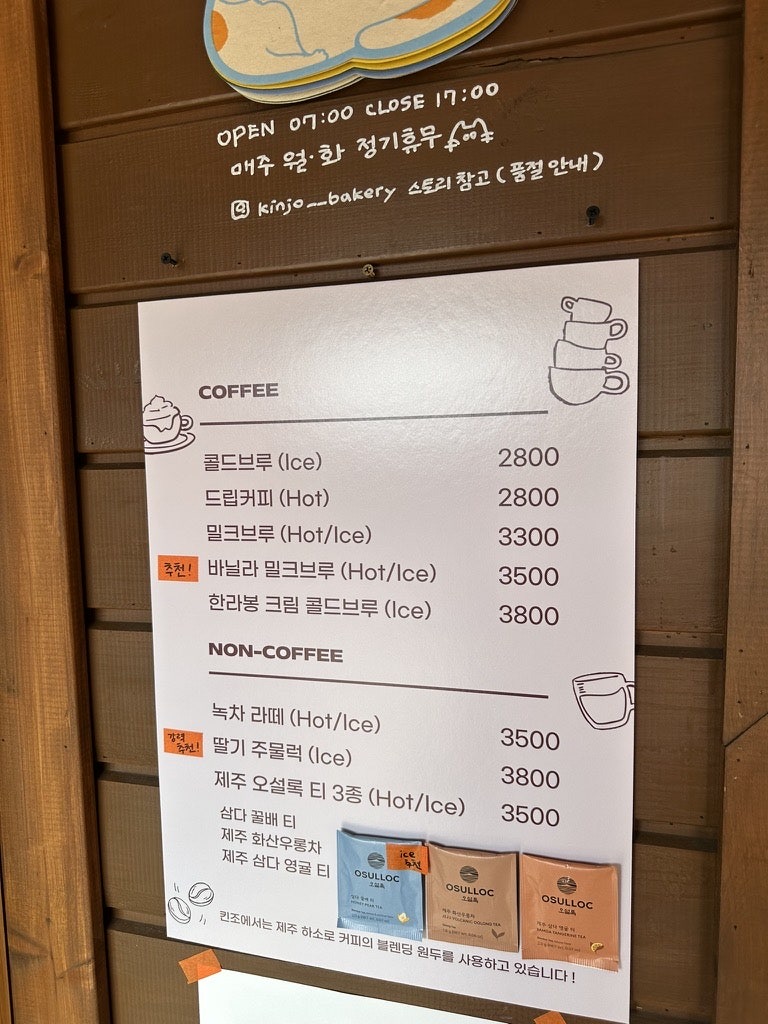 Drink prices, and the opening hours written above them.
When we arrived, it turned out to be a compact bakery tucked behind a GS25 convenience store building, run as takeout only. The drinks are inexpensive: on the board at our visit, cold brew and drip coffee were KRW 2,800 and a Hallabong cream cold brew was KRW 3,800, with a note that Kinjo uses a coffee blend from Hasoro, a Jeju roaster. Above the board, a hand-written line says it is closed every Monday and Tuesday and points to its Instagram stories (@kinjo__bakery) for sold-out notices.
The space was small, but the nutty smell of butter that rushed out the moment the door opened, and the sight of all kinds of bread neatly filling the display, were more than enough to paralyze the reason of a starving married couple like us. It was the start of a happy but agonizing debate over which ones to pick.
A marketer’s view: choose and focus, and the word-of-mouth a signature creates
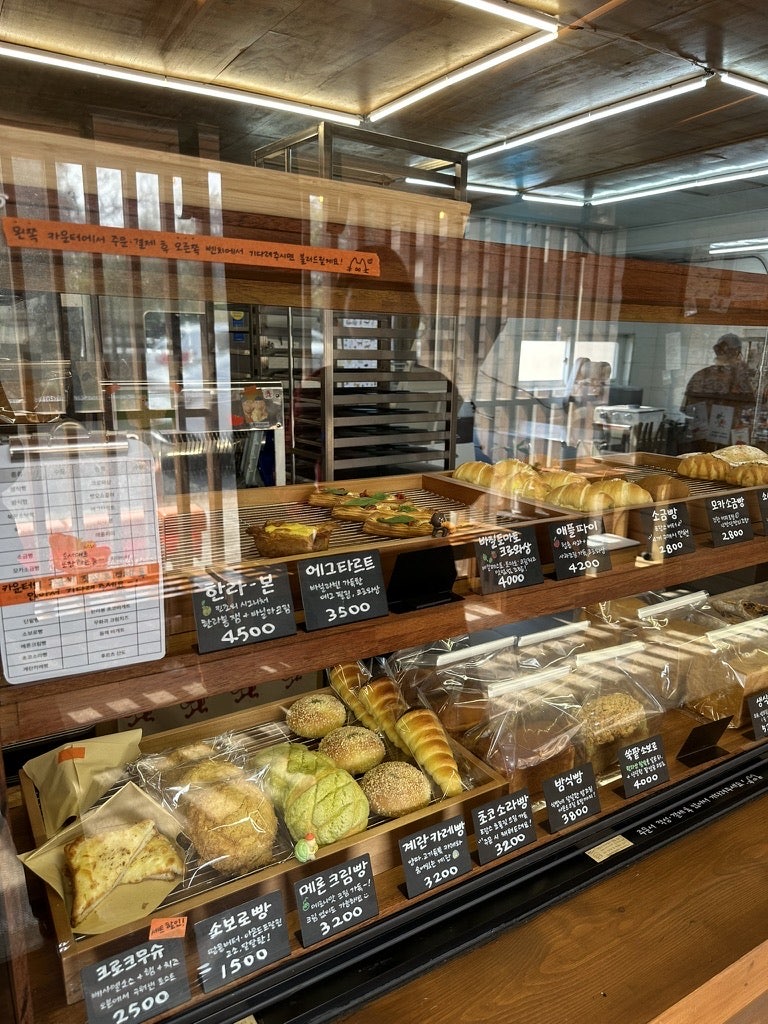 So many breads lined up on display.
Look at Kinjo Bakery’s space and business model through a marketer’s eyes, and the first phrase that comes to mind is “choose and focus.” This place boldly gave up any seating area where customers could sit and rest. Instead, it opens very early, at 7:30 in the morning, and pours all its energy into one essential thing: the taste and quality of the bread. It has taken a practical strategy, cutting the fixed costs that would go into a large shop and flashy interior, and maximizing the competitiveness of the product itself. I think that is also part of why the bread and drinks are priced so reasonably.
Above all, a big part of how this place became a must-stop on a Jeju bread pilgrimage goes to its signature, the Halla-bon. The combination of its unusual ribbon shape and a bright fruit filling seems to have gone hugely viral on Instagram and other social media. (I remember seeing it through channels like Instagram myself and saving it back then.)
A signature item that works as a clear hook stirs people’s curiosity and brings them in. The customers who come are won over by the solid taste of the basic breads and pour out reviews on their own. That virtuous cycle makes this a great case study of a shop breaking through the limits of its size with overwhelming product planning and branding.
The sold-out signature proved the bakery’s real skill
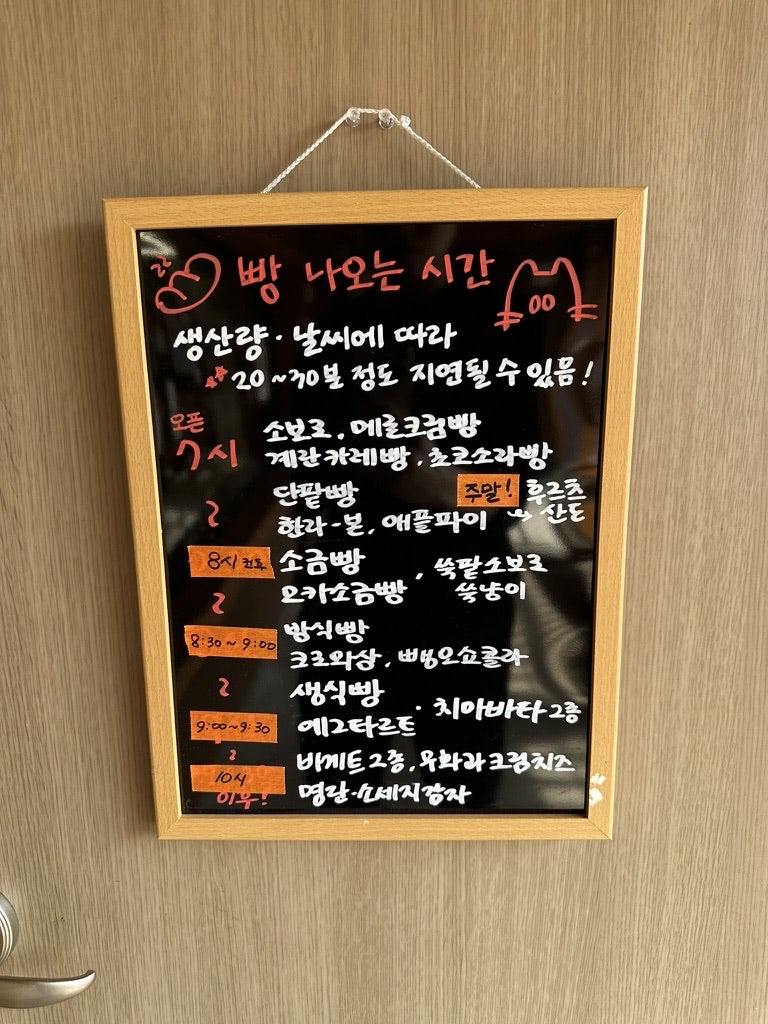 Thoughtful touches everywhere, like this board of baking times: the Halla-bon comes out early in the morning.
As the two of us scanned the bread with eagle eyes in front of the display, a bolt from the blue landed on us. The legendary bread that made this place famous, the Halla-bon, had already sold out without a trace. The disappointment lingered, but looked at the other way, the very fact that the signature sells out before the afternoon even begins proved how hot this Jeju bread pilgrimage spot is. The board by the door lists when each bread comes out, with a note that times can slip by 20–30 minutes depending on the day’s volume and the weather; the Halla-bon comes after the 7 o’clock opening batch, before the salt bread at around 8.
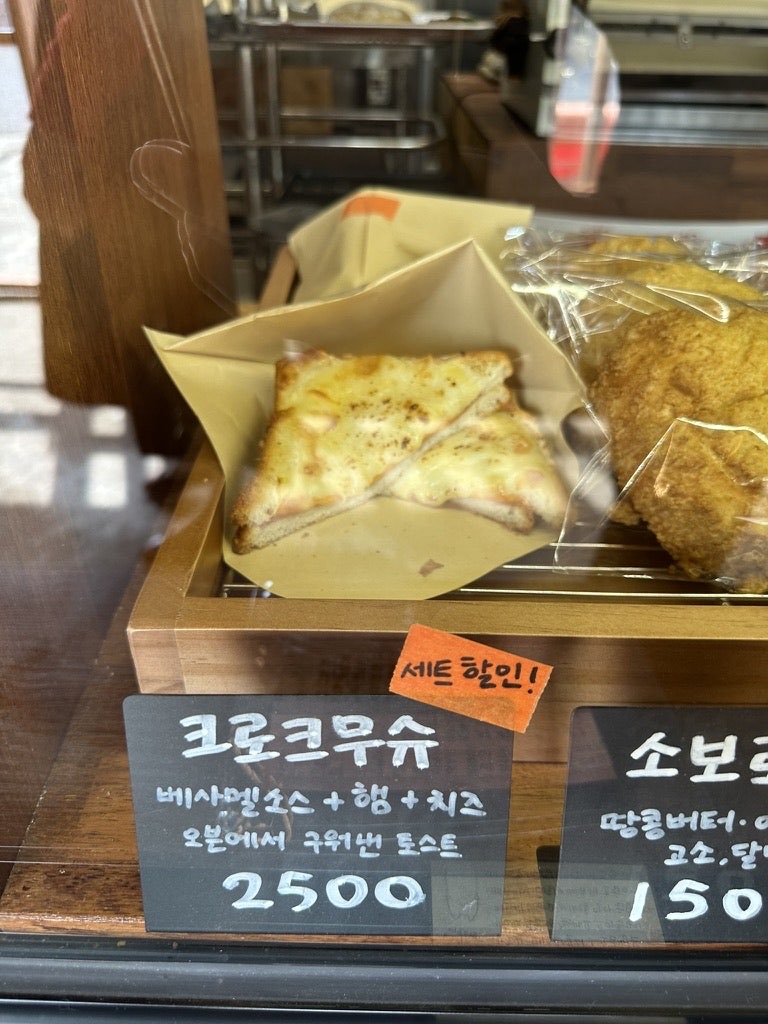 My picks, my precious breads: the croque monsieur with béchamel, ham and cheese, KRW 2,500.
Putting the disappointment behind us, we picked a salt bread, to check the bakery’s fundamentals, and a croque monsieur, to fill our stomachs properly, and had them packed to go. We tore open the bread bag the moment we got in the car, and with no exaggeration at all, the air in the car filled with the nutty richness of butter.
First, I took a big bite of the salt bread. The saltiness typical of salt bread did not jab the tongue hard; it spread very gently and in balance. Above all, the outside was pleasantly crisp while the crumb inside was unbelievably moist and soft. The croque monsieur, too, was not dry at all; the filling and the bread came together perfectly, with a deep flavor.
The disappointment of missing the Halla-bon vanished, and we wolfed the bread down in the driver’s and passenger’s seats, saying nothing but “Wow, this place really knows bread.” It was a magical taste that took the energy we had burned on Anchin Oreum and recharged it to 200%.
A private tasting session in the car
As I mentioned in the marketer’s view above, the fact that this is a takeout-only shop with no seating actually came across to us as a bigger advantage. If we had been sitting in a cafe with a nice atmosphere, we might have been looking at the view or chatting, and not been able to focus 100% on the finer points of the bread.
But in the small, private space of the car, we could put every bit of our attention on the texture in our mouths and the smell of butter around our noses. Looking out the window as Jeju’s beautiful scenery went by, sharing bread and brushing the crumbs off as we went. The drinks were good, and the bread was so, so good. It may look a little rough and unpolished, but the wild joy that bursts out when you meet the most delicious food at the hungriest moment of a trip cannot be compared with any fine dining. With no flashy trimmings, competing on nothing but the essence of the bread, Kinjo Bakery filled a very vivid and delicious page in our memories of Jeju.
Epilogue: an essential stop for travelers around Gujwa-eup and Hallasan
Having tried it myself, the target customers who will never regret a visit here are very clear. If you have planned your sightseeing on Jeju’s east side, especially around Gujwa-eup or along the lower slopes of Hallasan, you should absolutely add Kinjo Bakery as a stop along your route. It is good for loading up on carbs before climbing an oreum, and as a sweet snack to ease the tiredness after you finish your day and come down, it could not be more perfect.
Since it opens early, at 7:30 in the morning, it is nothing short of a blessing for anyone starting an east-side tour early. But if you visit in the afternoon like we did, there is a high chance you will not even catch a glimpse of the Halla-bon, the star of all that word of mouth. So if you want the real sense of achievement of a Jeju bread pilgrimage, I strongly recommend getting there early, in the morning. Of course, even without the signature, this is a place with more than enough skill to satisfy your taste buds 100% on the basic breads alone.
When you go to a bakery, do you pick the flashy signature first, or a basic like salt bread first? Thanks for reading, and your likes and comments always help me keep going.
Related
These are the other reviews I linked from the original post, from the same Jeju trip:
- Slowboat Atelier Jeju: A Quiet Ocean View Cafe in Aewol
- Aewol Seafood Restaurant: Namttori Sashimi Near Dyne Oceano
- Abalone Near Handam Beach: Eunhye Jeonbok Set Meal in Aewol
- Aewol Black Pork BBQ: Godokan, Ocean Views Near Dyne Oceano
- Dyne Oceano Hotel Breakfast: Andamiro Buffet in Aewol, Jeju
- Aewol, Jeju: A 2-Night Food Plan From Our March 2026 Trip
Read the original Korean review on Naver (with all photos): 한라본 품절이어도 대만족! 기본기가 미친 제주 빵지순례 킨조베이커리 후기